Leak Detection for Homes & Businesses: Modern Methods Explained
Hidden leaks don’t wait for a convenient moment. Maybe it’s a slow drip behind your drywall, or a sudden burst beneath your business’s concrete floor. Either way, water has a way of sneaking up on property owners—causing expensive repairs and even health risks.
At Wilson Plumbing, we know what’s at stake. We’re called out for emergency plumbing every day, and we’ve seen just how quickly small leaks turn into big problems. Here’s what you need to know to protect your property, your budget, and your peace of mind.
Why Early Leak Detection Matters 💧
Think of your plumbing like your car’s engine. You wouldn’t ignore a strange noise under the hood, right? Leaks are the same. Waiting too long turns a $10 fix into a four-figure nightmare.
- Cost: Water loss adds up on your utility bill. Last year, the Environmental Protection Agency (EPA) estimated household leaks waste nearly 1 trillion gallons a year nationwide.
- Safety: Water leaks create hidden mold, which can trigger asthma or allergies. Gas line leaks? Far more dangerous—potentially explosive.
- Property Value: Water stains, warped floors, or sagging ceilings send red flags to future buyers and inspectors.
Catching leaks early means fewer headaches and lower bills. It’s that simple.
Signs of Hidden Leaks
Leaks aren’t always obvious. Here’s what to watch for—at home or at your business:
- Unexplained spikes in your water bill
- Damp spots on walls, ceilings, or floors
- Musty odors (hidden mold loves water)
- Low water pressure
- Running water sounds when pipes should be quiet
- Cracks in your foundation or driveway
- Peeling paint or bubbling wallpaper
For commercial properties, pay close attention to utility rooms, restrooms, and high-traffic areas. Even minor plumbing issues can disrupt business, damage equipment, or risk code violations.
Modern Leak Detection Methods
Gone are the days of tearing up walls and floors just to find a leak. Today, plumbers use tools as precise as a detective’s magnifying glass.
Thermal Imaging
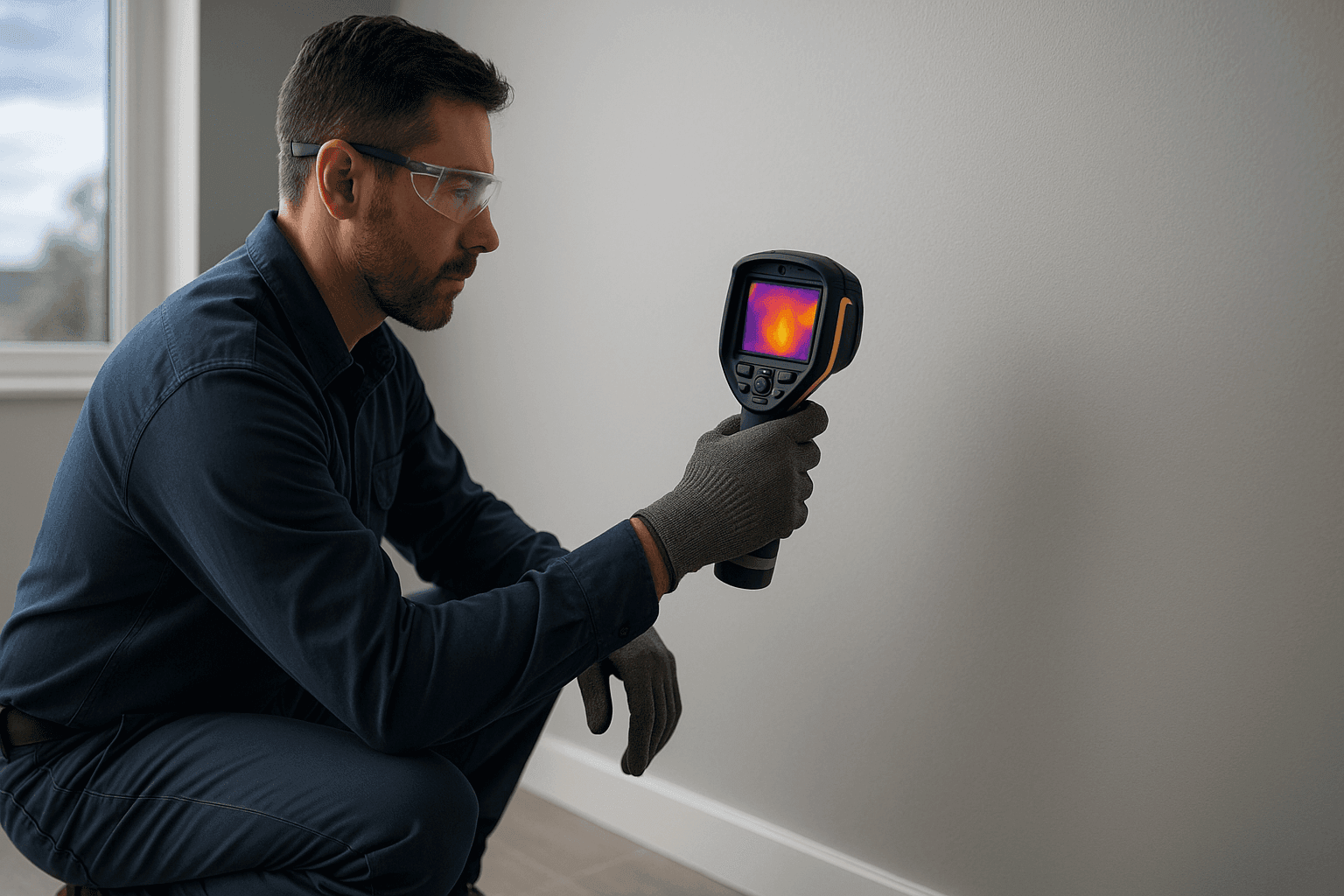
Picture a special camera that “sees” heat. Water leaks change the temperature of building materials. With thermal imaging, our technicians spot hidden moisture—without any mess. This means less guesswork and zero unnecessary holes.
Acoustic Sensors
Water escaping from pipes makes distinctive sounds, even when you can’t hear them. Acoustic sensors work like a stethoscope pressed to your walls or floors. They “listen” for the telltale frequency of leaks, pinpointing the location with uncanny accuracy.
Video Pipe Inspection
Ever wish you could see inside your pipes? With a tiny waterproof camera, we can. Video inspection snakes through your plumbing, giving a real-time look at cracks, root intrusions, or corrosion. It’s essential for sewer line inspection and Backflow Testing near you.
Moisture Meters
Sometimes, the best clues are in the details. Moisture meters measure the exact water content inside wood, drywall, or concrete. High readings point to trouble spots—often before you see any outward signs.
Commercial vs. Residential Needs 🏢🏡
Leaks don’t play favorites. But the stakes and solutions can look different for homes and businesses.
Residential
- Focus on kitchens, bathrooms, basements, and crawl spaces.
- Leak detection often targets fixtures, water heaters, and under-slab pipes.
- Quick repairs protect family health and home value.
Commercial
- Larger, more complex systems—think multi-story plumbing or specialized equipment.
- Leaks can disrupt operations, trigger health inspections, or violate safety codes.
- Regular Backflow Testing and preventative maintenance are often required by law.
Whether you own a home or manage a business, our certified technicians tailor the approach to your unique property.
What to Expect from a Professional Leak Check
Curious about what happens when you call Wilson Plumbing for leak detection?
- Assessment: We start with a detailed walkthrough. Listening to your concerns, noting any visible issues.
- Advanced Testing: Using thermal imaging, acoustic sensors, and video inspection as needed. No guesswork, no unnecessary damage.
- Minimal Disruption: Modern technology means we can often find leaks without cutting into walls or floors. Your routine stays intact.
- Clear Diagnosis: We explain exactly what we find—sometimes with video or infrared images so you can see for yourself.
- Action Plan: Whether it’s pipe repair, repiping, or leak repair, you’ll know your options and next steps.
Certified Technicians Matter
Every plumber at Wilson Plumbing is trained in the latest detection methods and follows local building codes, including the International Plumbing Code and state-specific safety regulations. We keep up with new technology, so you get the most accurate results.
Real-World Results
Here’s what a recent customer shared:
“I had a persistent musty smell in my office. Other plumbers kept patching the problem, but Wilson Plumbing found a leak behind the drywall using a camera. Fixed with minimal mess and no drama.”
We’re proud of stories like these—because they show what’s possible with the right tools and a careful approach.
Local and Seasonal Leak Risks
Every climate brings its own challenges:
- Freeze-Thaw Cycles: In cold winters, water expands as it freezes. Pipes can crack and leak as temperatures swing. Insulating exposed lines is key.
- Drought Conditions: Dry soil can shift, putting stress on underground pipes—especially sewer lines. Foundation settling may follow.
- High Rainfall: Sump pump repair and sewer line inspection become more important in flood-prone areas. Water intrusion can sneak in from unexpected places.
Whether you’re in snow country or a dry, sunny climate, Wilson Plumbing adapts our leak detection to your region’s unique risks.
Practical Tips for Home & Business Owners 🛠️
- Check your water meter at night and again in the morning. If the reading changes while no water is used, you may have a leak.
- Look for lush spots in your lawn—it can mean a broken underground line.
- Test for toilet leaks by adding food coloring to the tank. Color in the bowl means it’s time for a repair.
- Schedule routine Backflow Testing near you if your property uses irrigation or fire suppression systems.
FAQ: Leak Detection
How long does leak detection take?
Most jobs take 1–3 hours, depending on the property’s size and the complexity of your plumbing.
Is leak detection safe for my building?
Yes. The tools we use are non-invasive, meaning we rarely need to open walls or floors unless absolutely necessary.
Do I have to vacate my home or business?
In nearly every case, you can stay put. We work around your schedule and minimize disruption.
What if you find multiple leaks?
We’ll discuss all findings and options with you. Often, we can address several issues in a single visit—saving you time and future headaches.
When Is It an Emergency?
Some leaks can wait a day. Others can’t:
- Gas line leaks (smell of rotten eggs, hissing sounds)—leave the building and call emergency plumbing immediately.
- Major water leaks (burst pipes, flooding)—shut off your main water supply and call for help.
- Sewer leaks (strong odors, soggy ground, slow drains)—can cause health hazards and property damage.
If you’re unsure, it’s always better to call Wilson Plumbing. We offer emergency plumbing services 24/7 for homes and businesses.
Ready for Peace of Mind?
Don’t let a hidden leak drain your wallet or risk your health. With Wilson Plumbing, advanced leak detection is just a call away—no stress, no mess, just answers.
Call Wilson Plumbing now — or reach us anytime at 877-657-7531 .